Magi integrations: Your marketing tech stack, rethought as an ecosystem
Gong, Fathom, Notion, GitHub, and HubSpot feed one context layer. Claude and your agents work from it. LinkedIn, WordPress, Sanity, and HubSpot take the output. Connect each tool once and every surface, human or agent, works from the same picture of the customer.


Quick answer
Magi connects your marketing tech stack in four layers: data in, BrandOS, surfaces, and channels out.
Live: Fathom, Gong, Slack, Notion, GitHub, Google Drive, and the web feed BrandOS. Claude reaches it through our MCP server. LinkedIn, WordPress, Sanity, and HubSpot take the output.
Coming: Salesforce, Google Analytics, Ahrefs, Reddit, and G2 as signals; Figma and Adobe for design; Codex, Gemini, and team chat as surfaces; X, Highspot, Reply.io, Apollo, Outreach, and ads as channels.
HubSpot today: publish emails and pages from Magi. Next: deals and contacts flow back.
One context layer for GTM, used from wherever you work.
15,505 tools, and none of them know your customer
The martech landscape reached 15,505 products in 2026 and grew by under one percent, the first flat count in fifteen years. Scott Brinker, who runs the count, calls it a possible peak. The average enterprise marketing stack runs 91 of those tools and uses under half, the lowest utilization Gartner has measured in five surveys. A B2B SaaS marketing team runs a median of 14 tools, and each marketer loses about 12 hours a week moving between them.
Licenses are the small cost. The large one: no tool knows the full customer. The CRM has one version of a contact; the email platform another. Two-thirds of marketing organizations call data integration their biggest stack problem, ahead of cost and skills. AI agent pilots fail at 65% in stacks with 15 or more tools, against 28% in consolidated ones. Forrester found teams on five or fewer core tools produce 23% more pipeline per marketer than those on 25 or more.
Magi is built for that picture. Your tools stay. Magi adds one context layer, BrandOS, that reads from them and writes to the channels you publish on. The agents work from that one place. Today, the layer takes in calls, docs, code, and your CRM. It runs in the Magi app and in Claude. It publishes to LinkedIn, your website, and HubSpot. The diagram is where we are headed: each category of a GTM stack, connected once. Each section below marks live and coming.
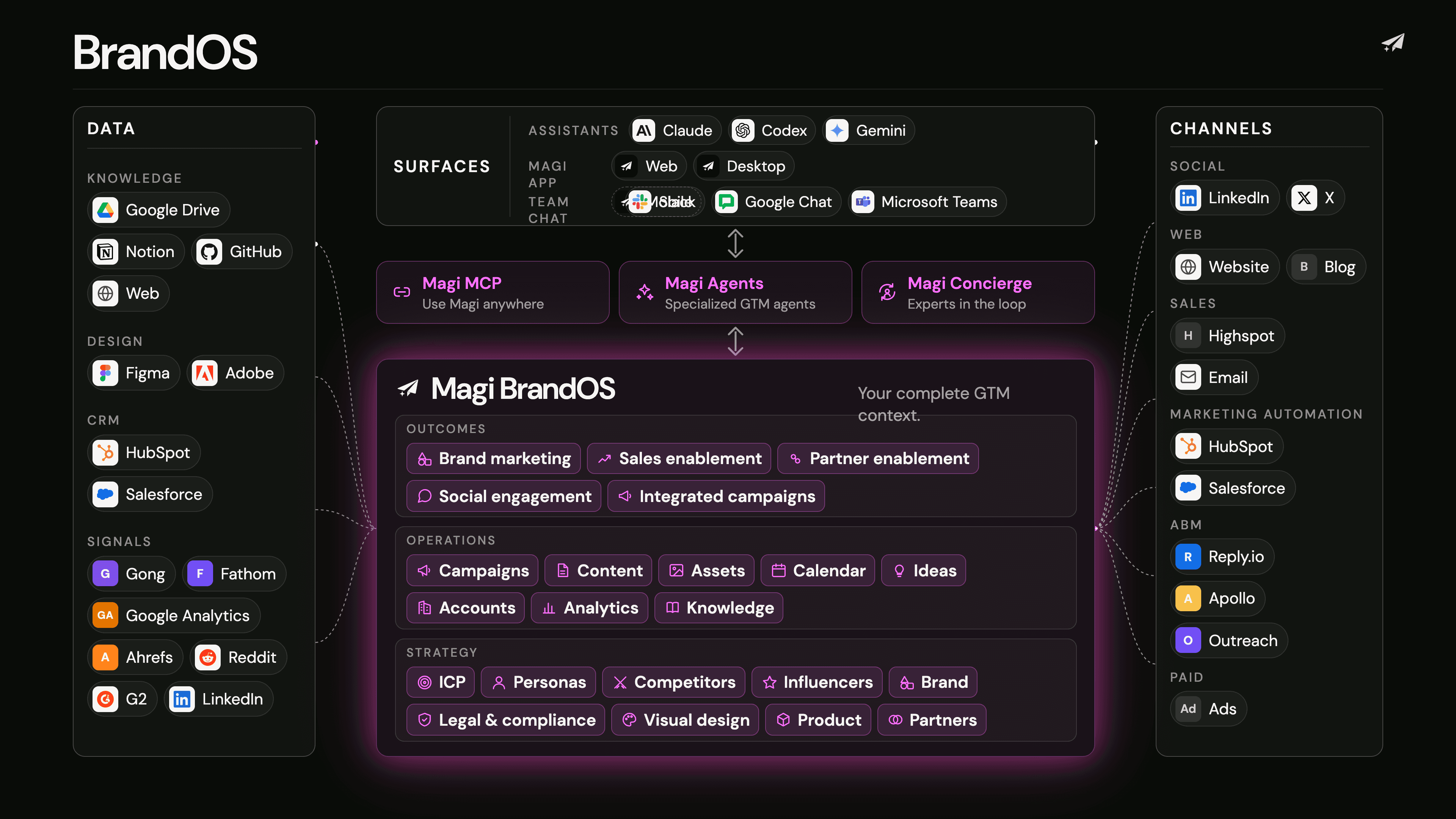
Data in: calls, docs, code, and CRM become one knowledge base Magi's agents read
These feed the knowledge base and the account picture in BrandOS. Once connected, they sync without you. The last column shows who reads each source. Research, Ideation, Content, Competitive Intel, Brand Audit, and Copilot in the editor draw on one knowledge base.
Knowledge: docs and code the agents can cite
Tool | What it does in Magi | Used by | Status |
|---|---|---|---|
Pages sync into the knowledge base | Content Agent citations, Copilot, Brand Audit | Live | |
Pick repositories; files become knowledge, PRs and releases are tracked, a weekly workflow writes release notes from merged PRs | Content Agent (release notes), Copilot | Live, Beta | |
Google Drive | Docs the agent may cite | Competitive Intel | Live |
Web | Pages and feeds you point it at, summarized into knowledge | Research Agent | Live |

Design: content lands in your layouts
Tool | What it does in Magi | Used by | Status |
|---|---|---|---|
Push a designed page from the editor into your Figma file | Editor publish flow | Built, plugin awaiting publication | |
Adobe templates inside Magi, so content lands in your layouts | Content Agent, templates | Next |
CRM: HubSpot ships content out now, reads deals in next
Tool | What it does in Magi | Used by | Status |
|---|---|---|---|
Destination today (see below). Next: deals and contacts read into Magi accounts and analytics | Editor publish flow; Accounts and Analytics next | Live as destination, source next | |
Same as HubSpot, for Salesforce shops | Accounts, Analytics | Roadmap |
Signals: what customers and rivals say, by name
Tool | What it does in Magi | Used by | Status |
|---|---|---|---|
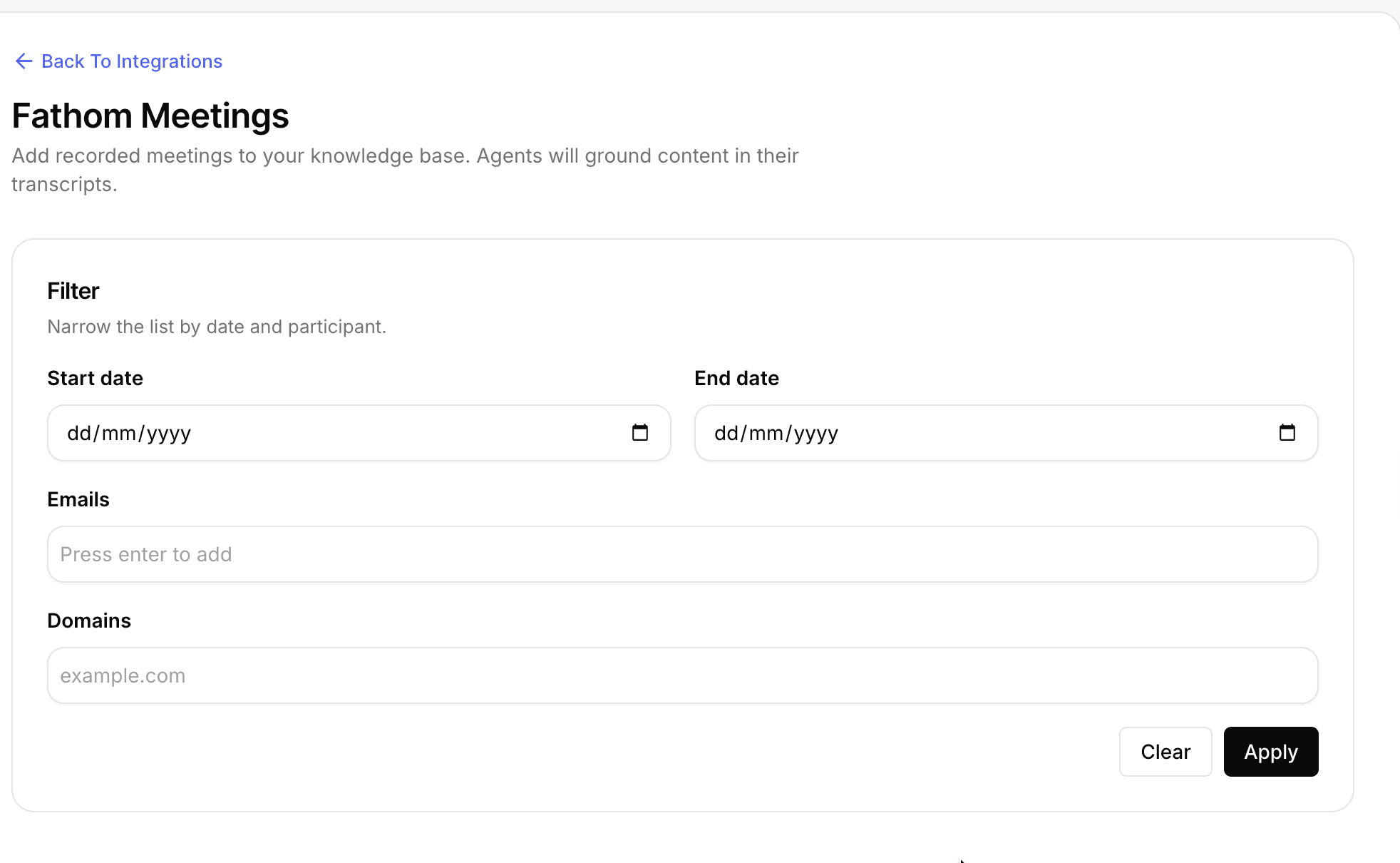
Each recorded call lands as a transcript with a summary. 100ms runs its LinkedIn program from Fathom interviews | Ideation, Competitive Intel, Content Agent citations | Live | |
Same, for sales calls. Backfills history, then syncs as calls close | Competitive Intel (rival mentions), Ideation | Live | |
Threads you mark for marketing become knowledge | Competitive Intel, Copilot | Live | |
Who reacted and commented on your posts, by name and company | Analytics | Live | |
Google Analytics | Site traffic next to content performance | Analytics | Roadmap |
Ahrefs | Keyword and ranking data | Briefs, SEO skill | Roadmap |
Reddit and G2 | Customer sentiment | Competitive Intel | Roadmap |
BrandOS: one connection improves each agent
Everything above lands here. BrandOS holds brand, ICP, personas, competitors (the ontology), campaigns, calendar, accounts, analytics, and the knowledge base. Nothing you connect is used alone: a Gong call is read against the ICP, a draft is checked for brand. One connection improves each agent.
Surfaces: BrandOS in the Magi app and in Claude through our MCP server, team chat next
BrandOS goes where you work.
Surface | How | Status |
|---|---|---|
Magi web app | Agents, editor, calendar, analytics | Live |
Through our Claude MCP server: brand, campaigns, calendar, content, and the knowledge base, with your team's permissions | Live | |
Codex and Gemini | Same MCP server, once each assistant supports the standard | Roadmap |
Slack, Google Chat, Microsoft Teams | Ask Magi from team chat, same server | Roadmap |
Magi desktop app | The web app, on your desktop | Roadmap |
Between the surfaces and BrandOS sit Magi Agents (research, ideation, content, brand audit, competitive intel), Magi MCP (BrandOS in other tools), and Magi Concierge (our operators, where judgment is needed). Skills run on top of the agents' output at set stages.
The MCP carries each integration on this page. Ask Claude for last week's Gong calls about a competitor and they come from the Magi knowledge base. Finish a draft in Claude and it is in the Magi editor, ready to publish. Connect a tool once and each surface can use it.
Design in Magi. Publish directly to LinkedIn, your site, and HubSpot.
Content is designed in the editor, so publishing sends the finished piece. Content distribution covers the publish flow in detail.
Channel | What it does in Magi | Status |
|---|---|---|
Publish a post with its on-brand image from the calendar. Personal profiles today; company pages wait on LinkedIn Community API access | Live | |
X | Same flow for X | Roadmap |
Website and blog | WordPress for blogs; AccuKnox publishes across all its markets this way. Sanity for structured sites, with an optional Studio plugin that keeps tables, charts, carousels, and CTAs exactly as designed | Live |
Newsletters and campaign emails into HubSpot Marketing Email | Live | |
Sales enablement assets pushed where reps find them | Roadmap | |
HubSpot and Salesforce | Marketing automation: emails, pages, and campaign assets | HubSpot live, Salesforce roadmap |
Reply.io, Apollo, Outreach | ABM sequences written in Magi, sent from your outbound tool | Roadmap |
Ads | Paid creative and copy from the same brand context | Roadmap |
HubSpot integration: content ships out now, deals and contacts come back next
At INBOUND 2026 HubSpot calls itself the agentic customer platform, with more than 2,000 marketplace integrations. For most of our customers it is where the customer record lives. Magi is where the marketing context lives. The two fit together in a specific way.
Now: HubSpot is where Magi content ships. Connect from Settings > Integrations. From the Magi editor, send a newsletter or campaign message into HubSpot Marketing Email, header image included. Landing pages go into HubSpot CMS. The brief, draft, brand check, and design happen in Magi. HubSpot sends. NexaSure runs its newsletter this way: Brenda writes and designs in Magi and sends from HubSpot.
A note on the HubSpot email integration: their editor sometimes hides images that show fine in preview and in the sent message. Delivery is unaffected.
Next: HubSpot data flows back. HubSpot stays the source of truth for revenue. Magi adds marketing context on top. Deals and contacts read into Magi so:
The Analytics dashboard adds won revenue and open pipeline by stage beside the team and LinkedIn views it shows now.
Accounts in Magi carry their HubSpot deal stage, so campaigns can target by it.
When a commenter on your LinkedIn post is a HubSpot contact, Magi flags it. That is the HubSpot LinkedIn integration marketers ask for: engagement tied to a CRM record
We run Magi's own release notes, newsletter, and ABM on these connections
We run our marketing on these connections. Weekly release notes come from the GitHub integration. The newsletter is written in Magi and sent through HubSpot. Sales calls arrive through Fathom and feed the Competitive Intel Agent's weekly rival report. ABM sequences are written in Magi and sent through Reply.io
One OAuth login connects most integrations
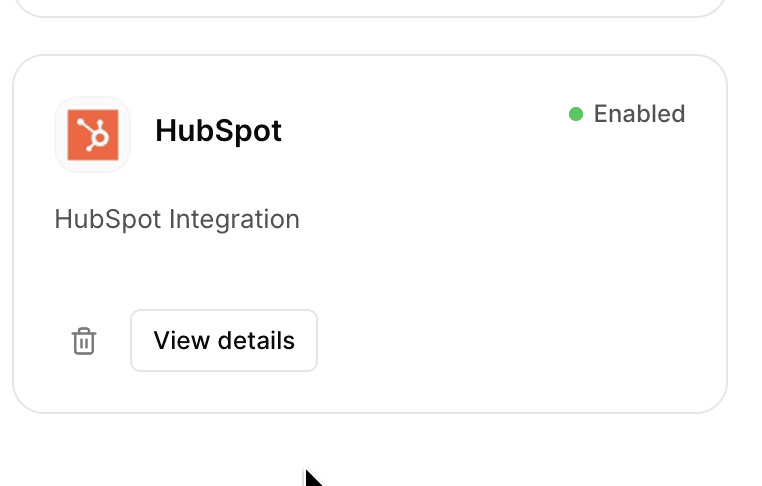
Settings > Integrations. Each card shows what the tool reads or writes and whether it is connected. Fathom, Gong, Slack, Notion, HubSpot, and LinkedIn connect with one OAuth login. GitHub asks you to install the Magi app and pick repositories. Sanity takes a project ID and API token. Sources then sync; destinations appear in the editor's publish menu.
If a tool your team lives in is missing, tell us at the demo. Customer requests set the roadmap.
Bring your tool list to a demo
Book a demo and bring your tool list.
Already on Magi? Login and open Settings > Integrations.
